Taero Kim
I am a Ph.D. student in the Department of Statistics and Data Science at Yonsei University, advised by Kyungwoo Song (Associate Professor). My research focuses on building machine learning models that are robust, generalizable, and efficient in real-world conditions.
My research interests include:
- Distribution Shift & Domain Generalization — principled methods for invariant feature learning that generalize reliably to unseen environments
- Large Language Models — efficient training, scaling, and knowledge transfer in LLMs
- Model Architecture Design & Efficiency — designing novel architectures and reducing computational cost through pruning, quantization, depth scaling, and parameter-efficient methods
- Bio AI — applying machine learning to Healthcare and Biology domains.
I am particularly excited about Diffusion Language Models (dLMs) as a new generative paradigm for discrete sequential data—offering alternatives to autoregressive generation with promising directions in controllability, parallelism, and representation learning for language.
Prior to my Ph.D., I received a B.S. in Physics and Nano Semiconductor Physics from the University of Seoul (2022). I have had the opportunity to visit the Australian National University (ANU, 2024) under the mentorship of Prof. Lexing Xie, and the University of Toronto (2025) as a Visiting Researcher at LG AI Research Toronto Lab under the mentorship of Nikhil Verma.
I am actively seeking research internship opportunities. Feel free to reach out at taero.kim (at) yonsei.ac.kr.
Selected Papers
Published in Under Review, 2025
Taero Kim, Hoyoon Byun, Youngjun Choi, Sungrae Park, Kyungwoo Song
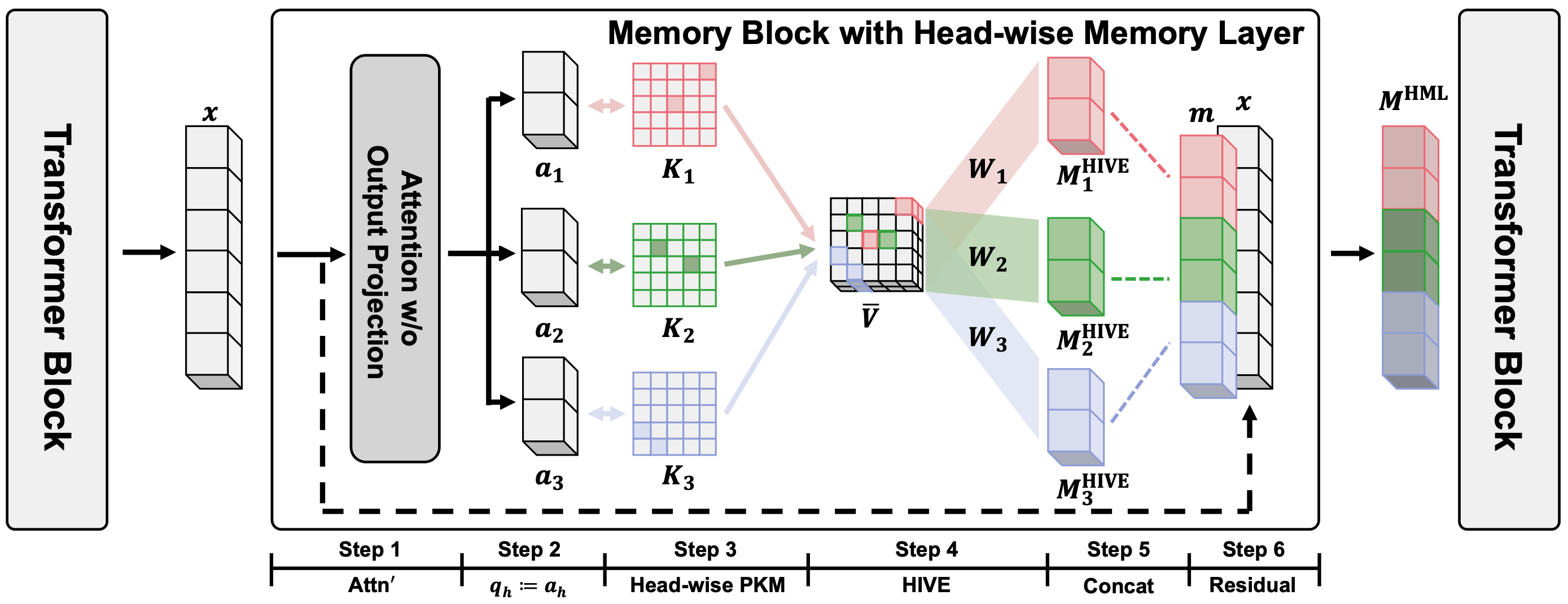
We propose MIDUS, a depth up-scaling method for large language models that infuses memory mechanisms into newly inserted layers. MIDUS enables efficient model depth expansion while preserving pretrained knowledge and improving parameter utilization.
Published in Efficient Reasoning Workshop at Neural Information Processing Systems (NeurIPS), 2025
Jung Lee*, Taero Kim*, Nikhil Verma (* equal contribution)
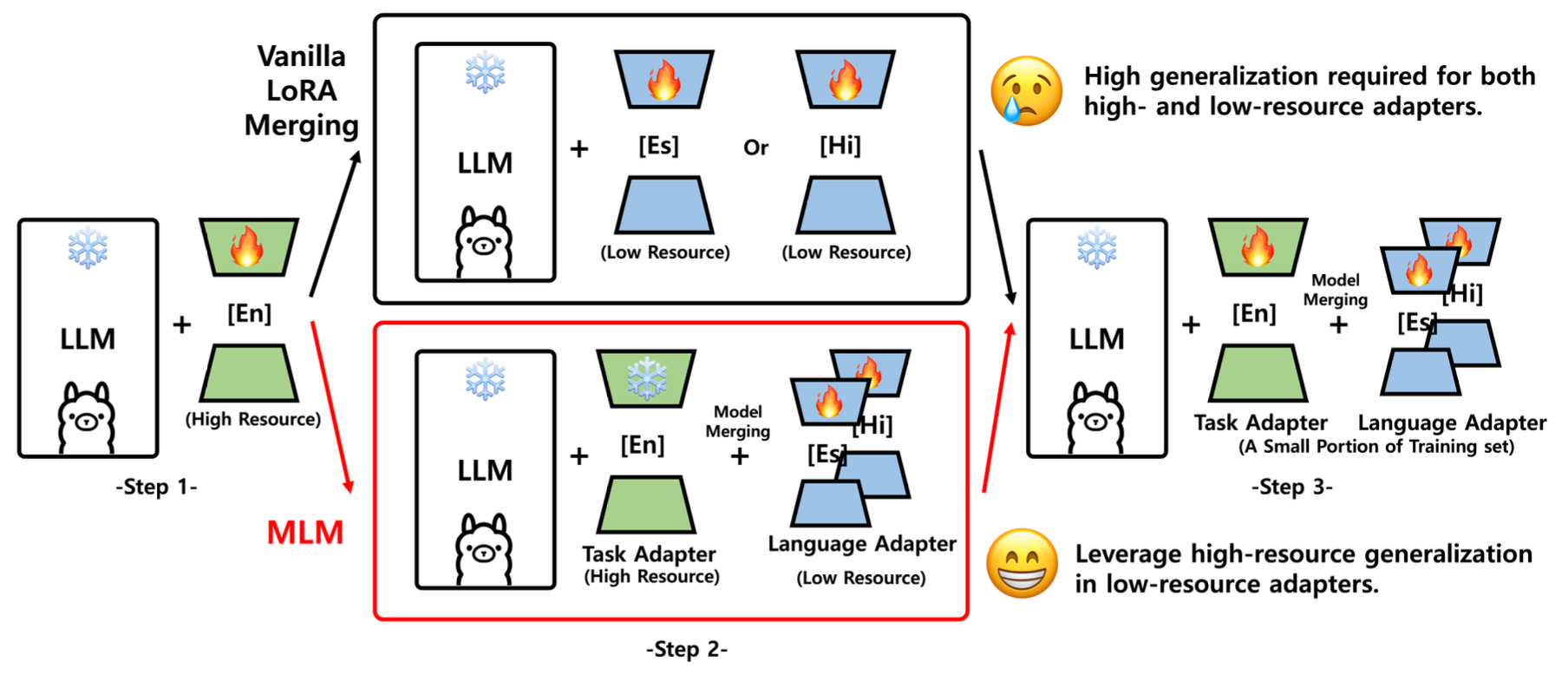
We propose Multi-linguistic LoRA Merging (MLM), a method that merges language-specific LoRA adapters to efficiently transfer multilingual capability into a single model without full retraining, enabling scalable multilingual large language model deployment.
Published in IEEE/CVF Conference on Computer Vision and Pattern Recognition (CVPR), 2025
Taero Kim, Subeen Park, SungJun Lim, Yonghan Jung, Krikamol Muandet, Kyungwoo Song
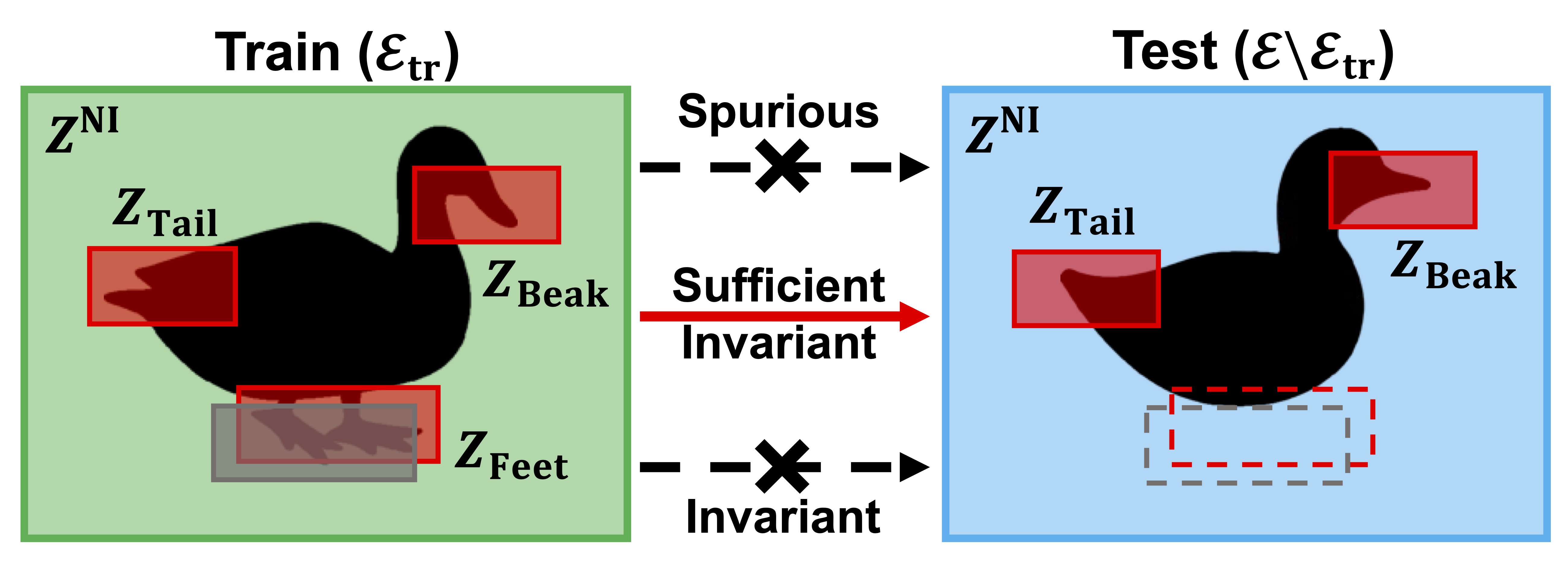
We identify that existing invariant learning methods are overly conservative—they discard predictive spurious features to ensure invariance. We propose Sufficient Invariant Learning (SIL), which leverages flatness-aware optimization to learn features that are both invariant and maximally predictive across environments, improving out-of-distribution generalization.
Published in CVPR 2025 Workshop on Domain Generalization: Evolution, Breakthroughs and Future Horizon, 2025
Taero Kim, Seonggyun Lee, Joonseong Kang, Youngjun Choi, Wonsang Yun, Nicole Hee-Yeon Kim, Ziyu Chen, Lexing Xie, Kyungwoo Song
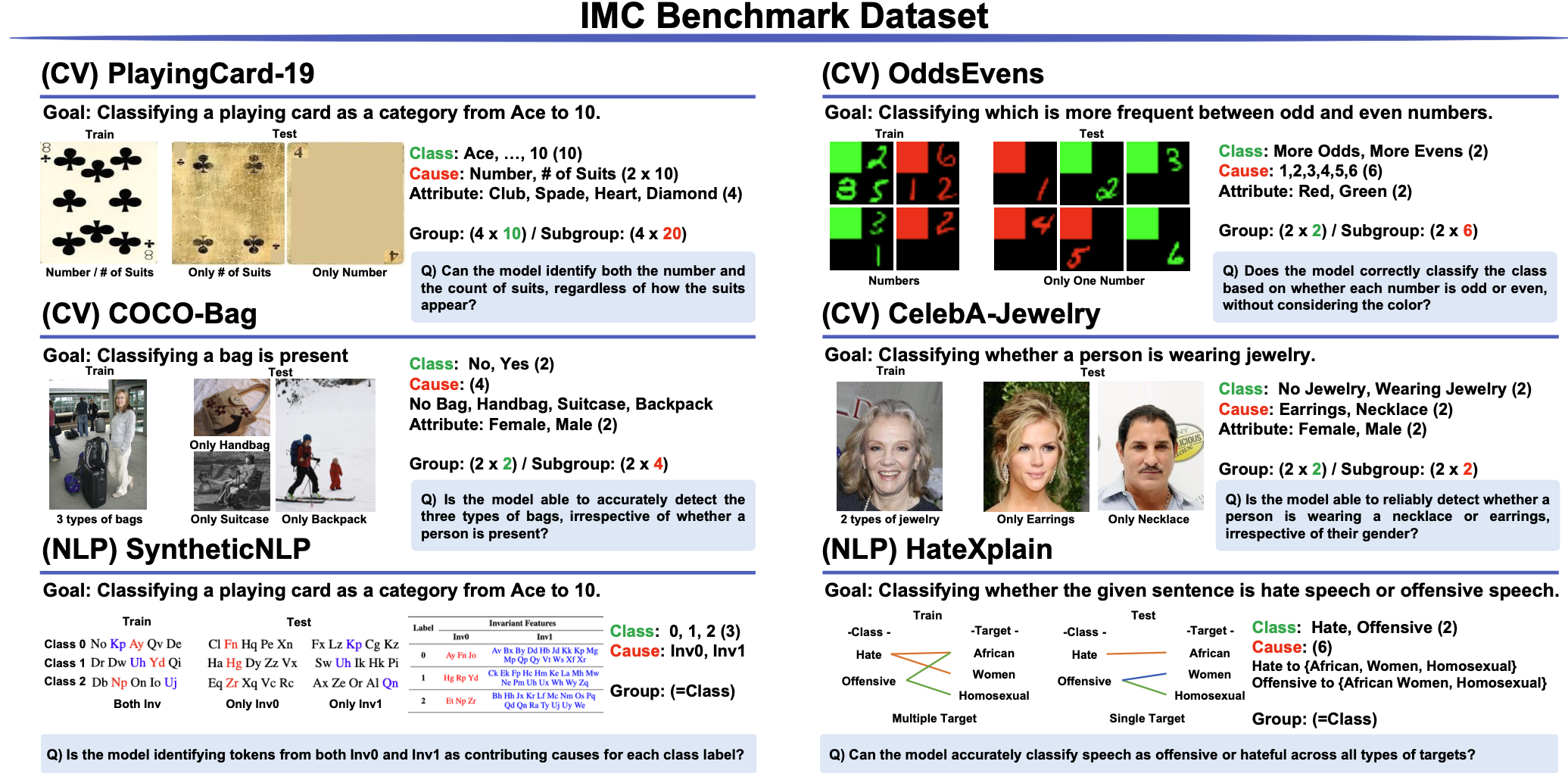
We introduce IMC, a benchmark that exposes fundamental failure modes of existing domain generalization methods under multiple causally-intertwined spurious correlations—a realistic but underexplored setting that current benchmarks fail to capture.
Published in Computers in Biology and Medicine, 2024
Taero Kim, Hyeonjeong Lee, Minseong Kim, Kwang-Yong Kim, Kyu Hyung Kim, Kyungwoo Song
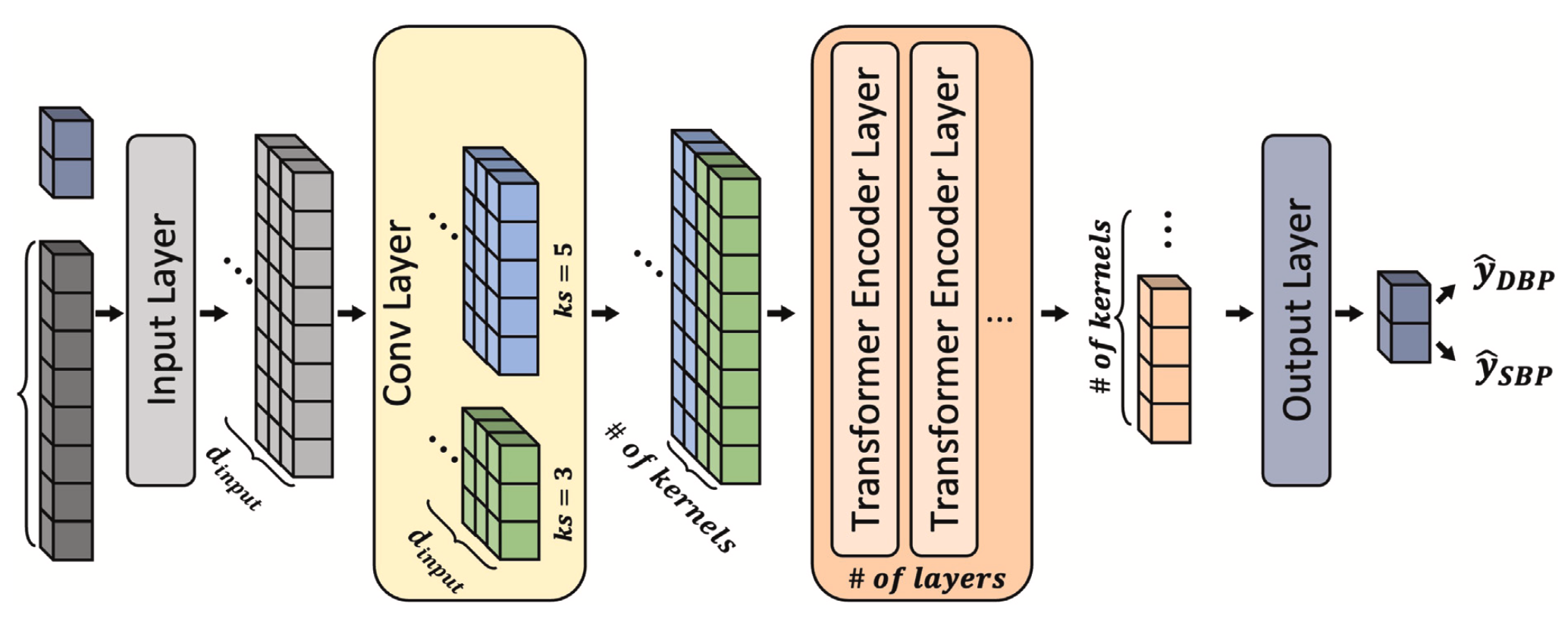
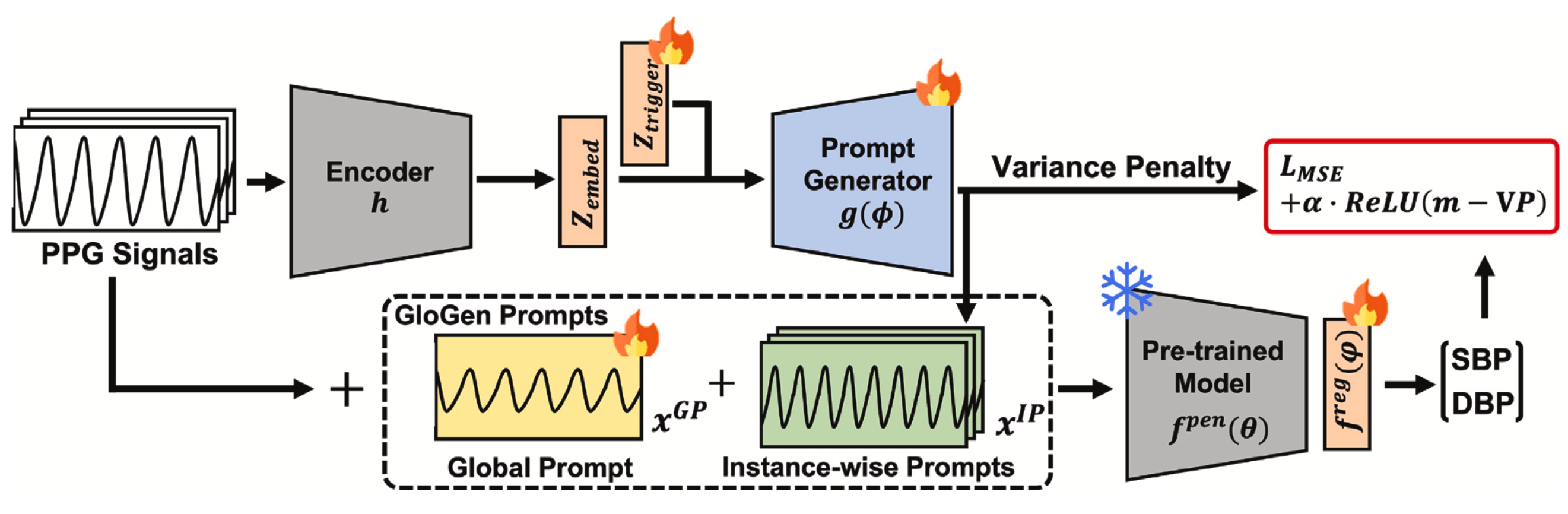
We propose GloGen, a global PPG prompt generation framework for few-shot transfer learning in blood pressure estimation. By generating subject-adaptive prompts from a small number of labeled samples, GloGen enables rapid personalization of blood pressure models with minimal calibration data.
Published in Biomedical Signal Processing and Control, 2025
Sungjun Lim*, Taero Kim*, Hyunjung Lee*, Yewon Kim, Minhoi Park, Minseung Kim, Kyuhyung Kim, Kyungwoo Song (* equal contribution)
We apply distributionally robust optimization to PPG-based blood pressure estimation to address data imbalance and distribution shift across subjects. Our approach improves estimation robustness and generalization to underrepresented physiological conditions.